

By Sandra Chukwunyere
The New Nigeria Peoples Party (NNPP) has urged Nigerians to reject vote-buying and political inducements from politicians ahead of the 2027 general elections.
- Advertisement -

Dr. Eugene Nweke, NNPP Head of Communication and Strategy, made the call in an Easter message issued in Lagos on Saturday.
Nweke said the Easter message was a wake-up call to all Nigerians—both leaders and citizens—as the nation gradually approaches the polls.

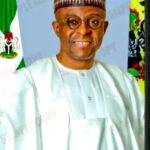
NNPP Head of Communication and Strategy.
He noted that the culture of immediate gratification, both in leadership and followership, had significantly undermined the nation’s political and national development.
He urged Nigerians to hold leaders accountable for past and present performance, rise above ethnic, religious and sectional sentiments, and demand issue-based campaigns and policy-driven debates.
“Every vote cast must reflect a commitment to the future—not a compromise for temporary gains. Norway chose discipline over indulgence, foresight over immediacy, and legacy over convenience. Nigeria now stands at a similar crossroads.
“As we approach 2027, this must not be just another electoral cycle—it must be a turning point in our national journey. NNPP calls on all Nigerians to rise to this moment with courage, clarity and conviction.
“The future of our nation depends on it—hard work and respect for the rule of law. There is hope for a greater Nigeria of our dreams. Yes, we can. God help us.”
Nweke said Nigeria must urgently recalibrate its governance and economic management systems by strengthening sovereign wealth and savings mechanisms.
He said this could be achieved by institutionalising fiscal discipline across all levels of government, promoting economic diversification beyond oil, and investing strategically in human capital development.
The party official added that the government should also enhance transparency and accountability in public finance, noting that these were not optional reforms but existential imperatives.
Nweke recalled that in 1969, Norway discovered vast oil reserves in the North Sea—an event that could have triggered reckless spending and economic distortion. Instead, Norway chose the path of discipline.
He said through deliberate legislative action in 1990, Norway established a sovereign wealth framework that ensured oil revenues were saved in a national fund and invested globally for future generations.
According to him, the fund has grown into one of the largest sovereign wealth assets in the world, transforming a finite natural resource into a sustainable economic legacy.
“Nigeria, equally endowed with vast oil resources, has experienced a markedly different trajectory.
“Over the decades, our oil wealth has not translated into enduring prosperity due to persistent fiscal indiscipline and weak public financial management.
“These include overdependence on oil revenues without diversification, policy inconsistencies driven by short-term political interests, institutional weaknesses that enable corruption and inefficiency, and inadequate savings and investment frameworks for future generations.
“Despite earning substantial oil revenues since the 1970s, Nigeria continues to grapple with infrastructural deficits, unemployment, poverty and economic vulnerability.”
Nweke said the contrast between Nigeria and Norway was neither accidental nor inevitable, but the direct consequence of choices made and opportunities missed.
He therefore urged Nigerian leaders to transition from the consumption of national wealth to the creation and preservation of national value.