








By Sandra Chukwunyere
The Executive Director, Operations and Technical of Tantita Security Services Nigeria Limited, Captain Warredi Enisuoh, has warned that Nigeria’s weak indigenous shipping capacity and heavy reliance on foreign-owned vessels pose a serious threat to national security and continue to limit employment opportunities for Nigerian seafarers.
He also attributed the growing unemployment among Nigerian seafarers to the limited international recognition of Nigerian maritime certificates, which restricts their access to opportunities in the global shipping industry.
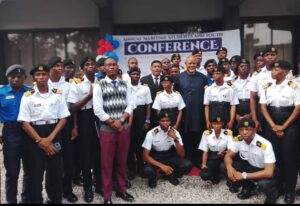
Speaking at the 10th Annual Maritime Students and Youths (AMSAY) Conference organised by Platform Communications, Enisuoh said that despite notable improvements in maritime security within Nigeria’s territorial waters, many Nigerian seafarers continue to face discrimination and limited employment opportunities in the international shipping industry.
The conference, themed “A Decade of AMSAY Conference: Eyes on the Horizon,” brought together key stakeholders to discuss the future of Nigeria’s maritime sector.
According to Enisuoh, while government agencies and industry operators deserve commendation for strengthening safety and security across Nigeria’s maritime domain, significant obstacles remain in the areas of fleet expansion, shipping capacity and manpower development.
He noted that the inability of Nigerian seafarers to secure employment on foreign vessels is largely linked to the non-recognition of Nigerian maritime certificates by several countries and international shipping companies.
To address the situation, he called on the Federal Government and relevant maritime authorities to pursue more mutual certificate recognition agreements with leading maritime nations, stressing that such partnerships would open wider employment opportunities for Nigerian seafarers across the global shipping market.
Enisuoh further lamented Nigeria’s weak shipping capacity, arguing that the country’s inability to transport a significant portion of its own cargo continues to undermine both economic growth and national security.
Drawing comparisons with major maritime nations such as China, he said countries that control the movement of their cargo through indigenous fleets enjoy stronger maritime capabilities, greater economic benefits and enhanced national defence.
“Many advanced nations carry the bulk of their cargo with vessels they own. That capacity strengthens their economies and contributes significantly to their security architecture,” he said.
The maritime expert explained that merchant fleets often serve strategic national interests during periods of conflict, noting that some countries can rapidly deploy commercial vessels for military purposes when necessary.
He warned that Nigeria’s heavy dependence on foreign-owned vessels for cargo transportation leaves the country vulnerable and limits its strategic options during emergencies.
Questioning the country’s long-term maritime vision, Enisuoh urged policymakers to clearly define Nigeria’s maritime objectives and take deliberate steps towards building a strong indigenous shipping industry.
He stressed that investment in ship ownership, maritime infrastructure and human capacity development should be treated as national priorities rather than purely commercial concerns.
According to him, strengthening indigenous shipping capacity is not only critical for economic growth and job creation but also essential for safeguarding Nigeria’s national interests in an increasingly uncertain global environment.
Enisuoh concluded by urging the government and industry stakeholders to take decisive action to reverse years of neglect in the shipping sector, insisting that a strong national fleet remains a vital pillar of maritime security, economic resilience and sustainable development.