






By Sandra Chukwunyere
The Nigerian Maritime Administration and Safety Agency (NIMASA) has unveiled newly acquired security assets, including advanced surveillance technology, unmanned aerial vehicles (UAVs), armoured vehicles and specialised tactical equipment, to strengthen maritime security under its Integrated National Security and Waterways Protection Infrastructure, also known as the Deep Blue Project.
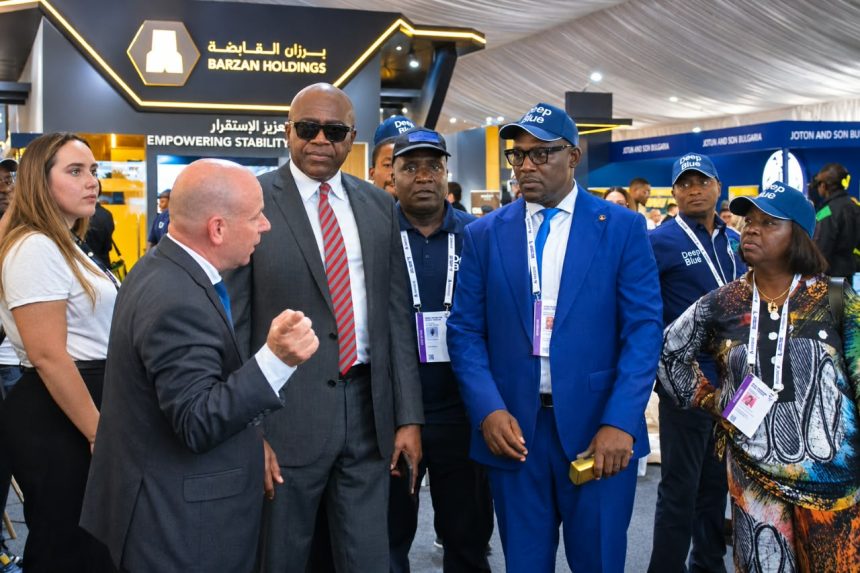
The agency unveiled the assets at the 2026 Africa International Defence Exhibition (AFRIDEX), as part of efforts to sustain maritime security operations and strengthen the country’s capacity to tackle piracy and other illegal activities in Nigerian waters.
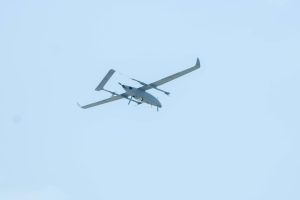
According to a statement signed by Osagie Edward, FNIPR, Deputy Director and Head of Public Relations, NIMASA, on November 3, 2026, the newly acquired equipment comprises light utility vehicles designed for bush and land-based operations, vertical take-off and landing (VTOL) unmanned aerial vehicles, newly delivered armoured vehicles and other specialised tactical equipment for the Deep Blue Project.
The Minister of Defence, General Christopher Gwabin Musa (rtd), was among the dignitaries who visited the NIMASA Deep Blue stand at the exhibition. He also witnessed a tactical simulation demonstrating how the Deep Blue Project responds to piracy attacks in Nigerian waters.
Speaking on the significance of the acquisitions, NIMASA Director-General, Dr Dayo Mobereola, said the new assets would strengthen the sustainability of the Deep Blue Project and provide military personnel deployed under the initiative with the necessary equipment to sustain the fight against piracy.
Mobereola, who was represented by the Head of the Deep Blue Unit, Aisha Yakubu Idris, reaffirmed the agency’s commitment to maintaining security across the country’s maritime domain.
He said Nigeria would not rest on its oars in sustaining its zero-tolerance policy towards illegal activities in its waters.
The Director-General noted that the provision of modern equipment remained important to sustaining the operational capacity of the Deep Blue Project, particularly as security threats within the maritime environment continued to require effective surveillance and coordinated responses.

Also speaking at the exhibition, Tal Spektor, Chief Executive Officer of HLS International, the technical partners of the Deep Blue Project, emphasised the importance of regularly upgrading security assets to address evolving maritime threats.
Spektor stressed that maritime security should extend beyond the sea, noting that illegal offshore activities often maintain links with land-based operations.
He explained that effective maritime security therefore requires attention to activities both offshore and on land, as well as the deployment of appropriate technology and equipment to strengthen surveillance and operational responses.
The HLS International chief executive also disclosed that upgrades to the project’s intelligence systems had improved cargo monitoring and information sharing between NIMASA and other government agencies.
He said these improvements had strengthened the project’s capacity to monitor activities and support information exchange among relevant government institutions.
AFRIDEX 2026 attracted reputable security organisations from different countries, alongside senior military officers and key stakeholders in Nigeria’s maritime sector.
The exhibition provided an opportunity for NIMASA to showcase the newly acquired assets and demonstrate the operational capabilities of the Deep Blue Project through a simulated piracy response exercise.
The latest acquisitions underscore the agency’s continued efforts to sustain the Deep Blue Project and strengthen the equipment available to personnel responsible for protecting Nigeria’s waters against piracy and other illegal maritime activities.