






By Sandra Chukwunyere
The Nigerian Maritime Administration and Safety Agency (NIMASA) has called on maritime journalists to uphold ethical journalism, embrace constructive reporting, and partner with stakeholders in promoting Nigeria’s growing blue economy.
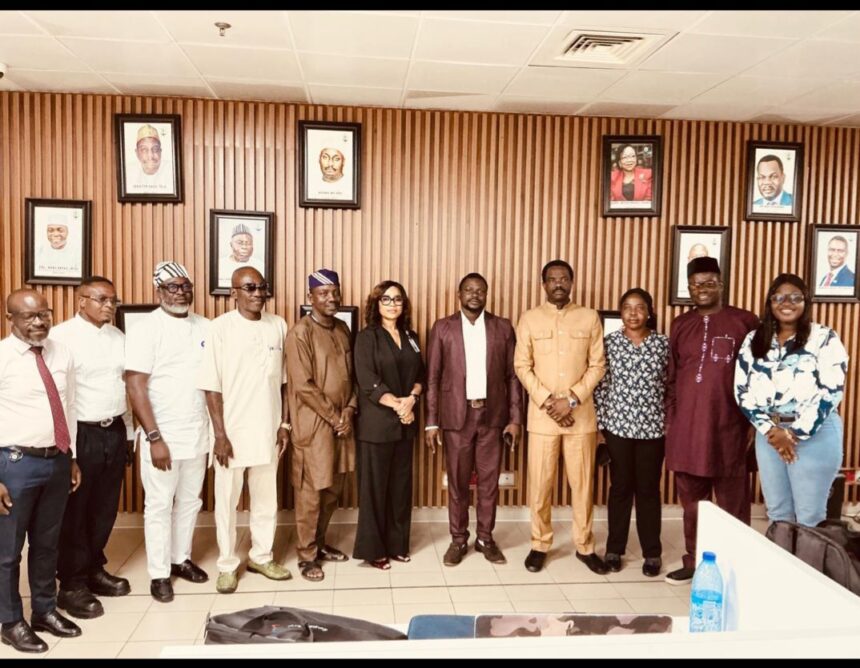
The call was made on Monday when the newly-elected executives of the Maritime Reporters Association of Nigeria (MARAN) paid a courtesy visit to the Agency’s headquarters in Lagos.
The MARAN delegation was received by NIMASA’s Deputy Director, Public Relations, Mr. Osagie Edward, alongside senior officials of the Public Relations Department.
The visit, which was the first official engagement between the new MARAN leadership and NIMASA, also served as a platform to discuss areas of collaboration, particularly capacity building for maritime journalists, information dissemination, and support for the Federal Government’s blue economy agenda.
Earlier in his remarks, the President of MARAN conveyed the association’s condolences to NIMASA over the death of one of its staff members, Ifenyinwa Okonkwo who reportedly passed away over the weekend.
The MARAN President expressed sympathy with the management and staff of the Agency and prayed for the repose of the deceased’s soul, while asking God to grant her family and colleagues the strength to bear the loss.
He noted that the purpose of the visit was to further strengthen the cordial relationship that has existed between MARAN and NIMASA over the years, while seeking deeper collaboration in advancing the maritime sector through responsible and informed journalism.
According to him, there is a need for more structured capacity development programmes for maritime journalists to enhance their understanding of industry issues and improve the quality of reportage within the sector.
Responding, Osagie Edward,Deputy Director/Head, Public RelationsNIMASA congratulated the newly-elected executives on their emergence, describing their election as a reflection of the confidence reposed in them by members of the association.
Edward acknowledged the longstanding relationship between MARAN and NIMASA, noting that the association has remained a key stakeholder in the growth and development of the maritime industry for more than two decades.
“We have known MARAN for over 20 years, from the days when press releases were physically distributed to the present digital era. You are now leading a digital MARAN and I encourage you to build on the achievements of your predecessors,” he stated.
He assured the association of NIMASA’s readiness to continue collaborating with maritime journalists for the advancement of the industry and the country’s economy.
According to him, the media occupies a strategic position in projecting the vast opportunities available within Nigeria’s blue economy and attracting the investments needed to unlock its full potential.
“The Nigerian blue economy presents enormous opportunities. If the sector is properly projected and branded, the world will become more aware of the potentials we have and investors will come seeking opportunities. This will ultimately benefit the country,” Edward said.
He further disclosed that the Director-General of NIMASA, Dr. Dayo Mobereola, is leading a team committed to positioning Nigeria as a leading maritime nation globally.
“As a maritime administration, the DG believes Nigeria should be a global leader in maritime administration, and we are working towards that objective. We can only achieve it by working together in the interest of the country,” he added.
On MARAN’s request for increased training opportunities, Osagie assured the association that capacity development remains a priority for NIMASA.
“Capacity building is very dear to NIMASA management. We have noted your request and discussions are already ongoing regarding training opportunities for the media. We will continue to engage because informed and constructive reporting is beneficial to the industry,” he stated.
Also speaking, Assistant Director, Public Relations, Daniel Kajo, urged members of MARAN to remain committed to the ethics of journalism and continue to promote professionalism in their reportage.
Kajo emphasized the importance of constructive criticism and balanced reporting, noting that the media remains an indispensable partner in the development of the maritime sector.
He encouraged maritime journalists to continue holding institutions accountable while ensuring that their reports are factual, objective, and geared towards national development.
The meeting ended with both parties reaffirming their commitment to strengthening collaboration in the areas of information sharing, professional development, and the promotion of Nigeria’s maritime and blue economy aspirations.