



By Sandra Chukwunyere
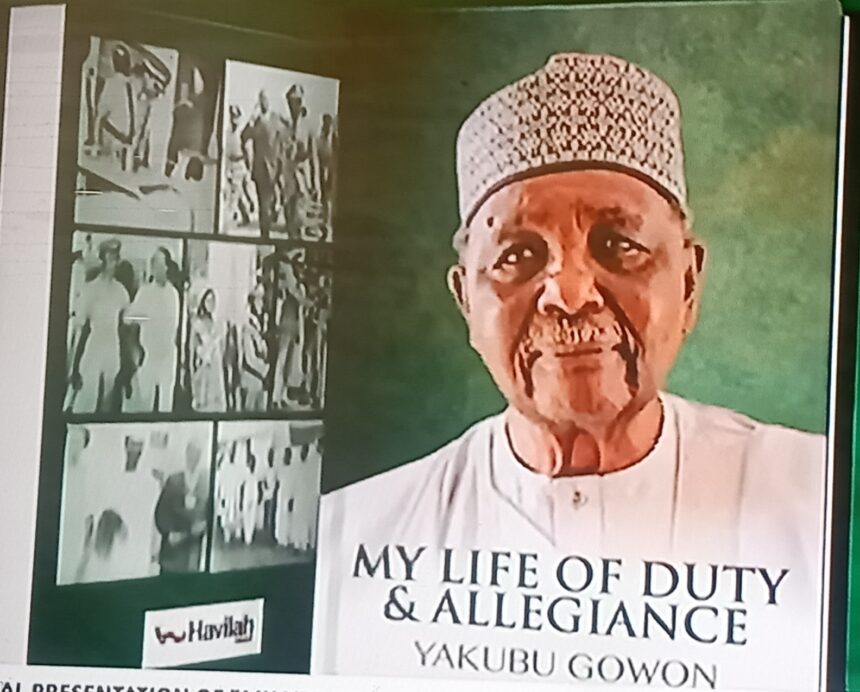
Former President Goodluck Ebele Jonathan on Tuesday hailed former Head of State, Gen. Yakubu Gowon, describing him as a leader whose post–civil war reconciliation efforts helped preserve Nigeria’s unity and laid the foundation for national healing.
Jonathan spoke in Abuja at the public presentation of Gowon’s autobiography held at the Bola Ahmed Tinubu International Conference Centre, Abuja, where he said the book captures key moments in Nigeria’s political and historical journey.
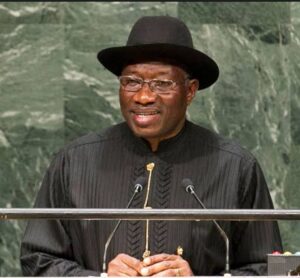
“Today’s event is not merely the unveiling of a book; it is the presentation of a living testimony,” he said. “It is the story of a leader who stood at the centre of some of the most defining moments in Nigeria’s history.”
He described the autobiography as a deep reflection on leadership, governance, military service, and the challenges of managing a diverse nation during turbulent times.
Jonathan said the work goes beyond history, highlighting the sacrifices and difficult decisions that shaped Nigeria’s unity.
“This autobiography offers not only a personal account of leadership and military service, but also insight into nation-building, reconciliation, peacebuilding, and statesmanship,” he said.
The former President described the 1967–1970 civil war as one of the most painful periods in Nigeria’s history but praised Gowon’s post-war reconciliation policy.
He said Gowon’s famous declaration of “no victor, no vanquished” became a turning point for national healing.
“The civil war remains one of the darkest chapters in our national history, but General Gowon demonstrated uncommon leadership at its end,” Jonathan said. “His declaration created the pathway for healing, reconstruction, and reintegration at a time of deep national pain.”
Jonathan also commended Gowon for introducing the National Youth Service Corps (NYSC), describing it as one of the most enduring post-war policies that strengthened national unity.
He said the scheme helped bridge ethnic divisions while also addressing manpower gaps in education and other sectors.
“The establishment of the NYSC remains one of the most important policies introduced during his administration,” he said. “It helped unite young Nigerians and supported education and national development.”
Recalling his personal experience, Jonathan said NYSC members posted to his secondary school in the early 1970s contributed significantly to his academic growth.
“I was in secondary school when some of the early NYSC members came to teach us,” he recalled. “They taught Mathematics, Chemistry, and Biology and played an important role in our education.”
Jonathan further praised Gowon for sustaining his commitment to peacebuilding, unity, and interfaith harmony decades after leaving office.
“General Gowon has continued to distinguish himself through years of public service and advocacy for peace,” he said.
He also emphasized the importance of leaders documenting their experiences for future generations, saying memoirs help preserve national memory.
“As younger generations study our history, it is important they hear directly from those who carried the burden of leadership during difficult times,” he said.
The book reviewer, Bishop of the Sokoto Catholic Diocese, Matthew Hassan Kukah, described the autobiography as a deeply reflective account of Nigeria’s political evolution.
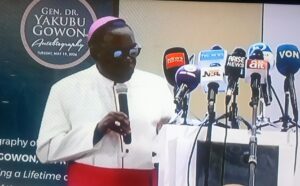
Kukah said the memoir carefully captured key historical moments, including the civil war, governance challenges, and post-war reconciliation efforts.
He noted that Gowon’s reflections provide both personal insight and national documentation that will remain relevant for years to come.
According to him, the book is not only a personal story but also an important national resource for researchers, students, and historians studying Nigeria’s journey.
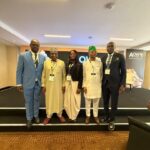
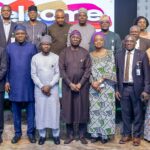
The event attracted a wide range of prominent Nigerians, including former Heads of State, serving and former governors, senior military officers, ministers, traditional rulers, diplomats, religious leaders, and top business executives.
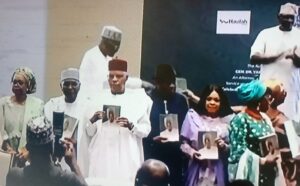
Also in attendance were Vice President Kashim Shettima (representing President Bola Tinubu), Gen. Theophilus Danjuma, Aliko Dangote, senior government officials, and members of the diplomatic community.
The gathering was widely described as a high-level national reunion of political, military, and business leaders in honour of Gen. Yakubu Gowon and his contribution to Nigeria’s unity and history.