





By Sandra Chukwunyere
The Nigerian Maritime Administration and Safety Agency (NIMASA) has stepped up maritime enforcement across key operational areas in Lagos with a coordinated intelligence-led operation aimed at strengthening compliance and tackling activities that could undermine security on Nigerian waters.
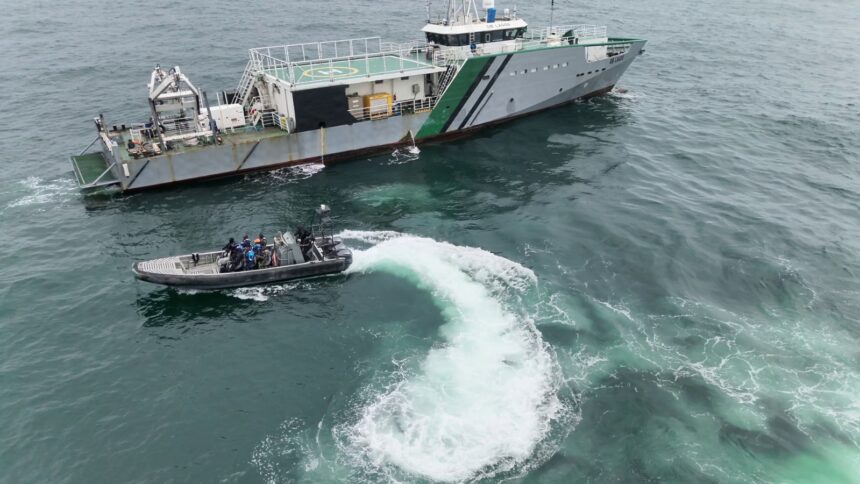
The operation, code-named “Blue-Green,” involved the deployment of assets under the Integrated National Security and Waterways Protection Infrastructure, popularly known as the Deep Blue Project, as well as other relevant maritime security units.
According to NIMASA, the exercise combined intelligence gathering, analysis and target development with coordinated enforcement activities at sea.
A new specialised intelligence capability within the NIMASA Deep Blue and Command, Control, Communications, Computers and Intelligence (C4i) systems was also deployed to enhance the identification, assessment and prioritisation of vessels of interest.
The new capability provided real-time intelligence support to enforcement teams, allowing them to focus their attention on identified targets during the operation.
NIMASA Director General, Dr Dayo Mobereola, said the agency would formalise the Blue-Green operation as a recurring intelligence-led enforcement model.
He said similar operations would progressively be extended to other maritime regions, including Port Harcourt, Calabar and Warri, subject to operational readiness and intelligence priorities.
Mobereola said the deployment of multiple enforcement platforms was also intended to deter individuals and groups involved in criminal activities on the waterways.
“This deployment of multiple enforcement platforms is to serve as deterrent to anybody with criminal intentions. We are glad with the level of cooperation from the armed forces,” he said.
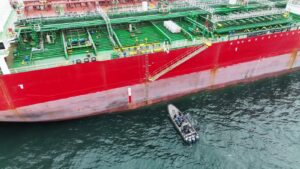
During the operation, several vessels were boarded and inspected as part of document verification and compliance screening.
The inspections covered statutory certification, cargo and voyage documentation, surcharge obligations and compliance with Nigeria’s Cabotage requirements.
NIMASA said the exercise demonstrated the importance of combining intelligence capabilities with maritime enforcement assets to improve the agency’s response to potential violations.
The agency added that the Blue-Green model would provide a foundation for more structured and sustained intelligence-led enforcement, with the broader objectives of improving maritime compliance, strengthening security and supporting revenue generation.