




By Sandra Chukwunyere
The Director-General of the Nigerian Maritime Administration and Safety Agency (NIMASA), Dayo Mobereola, has emphasized the importance of digital transformation as a key driver for increasing women’s participation in the maritime industry.
Mobereola made this call on Tuesday during a regional symposium held in Lagos and organized by NIMASA in collaboration with the Kofi Annan International Peacekeeping Training Centre (KAIPTC), Ghana.
The symposium focused on the theme “Digitalization and the Empowerment of Women in the Maritime Sector of West Africa: Opportunities, Challenges and Pathways.”
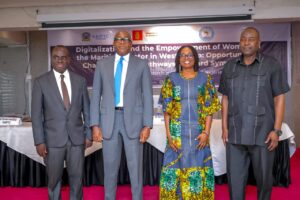
NIMASA DG who was represented at the event by the agency’s Executive Director for Finance and Administration, Chudi Offodile, noted that digitalization has the potential to significantly reduce the gender gap in the maritime sector by creating new opportunities and eliminating traditional barriers that have limited women’s participation.
According to him, digital transformation is redefining the maritime industry by shifting the focus from physical strength to intellectual capability and technological expertise. “Digitalization acts as the great equalizer, shifting the industry’s centre of gravity from physical strength to intellectual agility and technical precision.
Through digital platforms and e-learning systems, a young woman in a rural West African community can access the same training modules as anyone in more advanced parts of the world,” he said.
Mobereola further noted that the global maritime sector is undergoing a profound transformation driven by automation, digital technologies, data systems, and smart logistics.
These innovations are reshaping ship operations, port management, and regulatory frameworks within maritime administrations worldwide. He reaffirmed the agency’s commitment to promoting inclusive maritime development, stressing that Nigeria is determined to position its maritime sector as a model of gender inclusivity and digital excellence in the region.
In his remarks, the Deputy Commandant of KAIPTC, Zibrim Ayorrogo Bawah, highlighted the strategic importance of the Gulf of Guinea and the need to ensure greater involvement of women in shaping the future of maritime governance in the region, especially in the era of digital transformation.
Bawah noted that although women’s participation in maritime affairs has historically been limited by socio-cultural and institutional barriers, their involvement is crucial as it brings diverse perspectives and innovative solutions necessary for effective maritime governance.
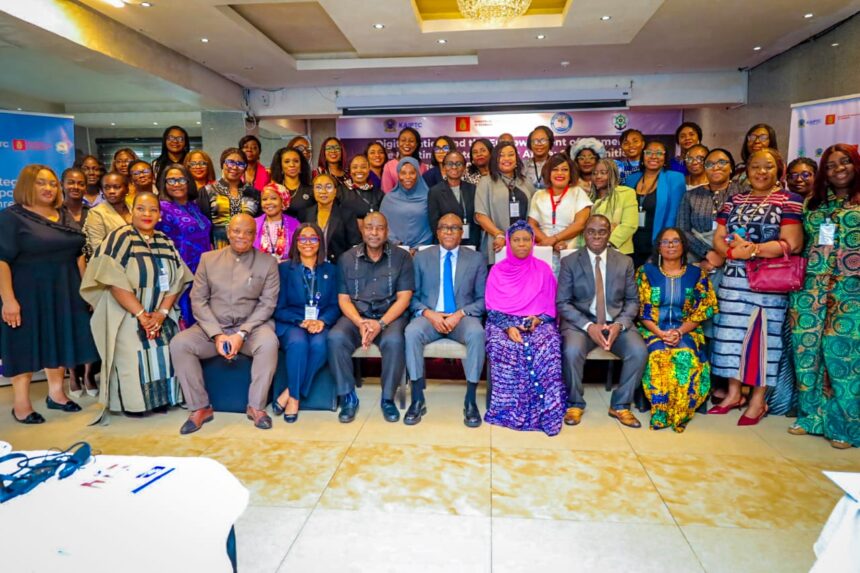
The symposium, supported by the Ministry of Foreign Affairs of Denmark and the Inter-Regional Coordination Centre for Maritime Safety and Security in the Gulf of Guinea (ICC), brought together senior government officials, maritime professionals, academics, women’s organizations, and media representatives from across West Africa.
Participants are expected to explore key issues including digital innovation in maritime governance, gender inclusion in maritime security operations, capacity building for women in digital maritime skills, and policy frameworks that promote gender equality across the Gulf of Guinea region.
The engagement is also aimed at strengthening collaboration among regional and international stakeholders to advance inclusive and sustainable maritime development in West Africa.