







By Sandra Chukwunyere
Concerns are mounting over the implementation of Nigeria’s National Single Window (NSW), as stakeholders warn that the ambitious trade reform may fail without strong political will, inter-agency coordination, and full digital readiness.
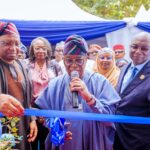
The concerns were raised at a one-day seminar held on April 15, 2026, at Rockview Hotel, Apapa, organised by the Media Anti-Corruption Initiatives (MACI) in collaboration with Hynek Media.
The event brought together representatives of the Nigeria Customs Service, freight forwarders, maritime journalists, Truck Transit Park officials, and other industry players under the theme: “National Single Window: Strategies to Avert Failure.”
Participants acknowledged the transformative potential of the NSW, noting that an efficient system could reduce trade transaction costs by up to 25 per cent, increase government revenue by 20 per cent, boost exports by 15 per cent, and attract about 10 per cent more foreign direct investment (FDI).
However, they warned that Nigeria’s history of failed reforms—often caused by weak coordination, institutional rivalry, and poor infrastructure—could undermine its success.
Speaking at the seminar, the Managing Director/CEO,Global Transport Policy Ltd, Dr.Segun Musa emphasised that an effective Single Window system must incorporate fast-track arbitration and appeal processes. Citing the International Chamber of Commerce, he noted that clear dispute resolution mechanisms can reduce trade disruptions by up to 40 per cent.
On enforcement, Musa referenced OECD studies indicating that effective compliance measures—supported by real-time risk engines, audits, and penalties for false declarations—can raise compliance levels by as much as 50 per cent.
Dr. Musa, who was represented by Mr. Mark Onuchi, also highlighted the importance of data-driven insights. He explained that data generated from shipments, tariffs, and processing timelines can help detect revenue leakages, guide infrastructure investments, and identify suspicious cargo patterns linked to smuggling.
He stressed the need for a true “one-stop shop” model where all trade documents are submitted once through a unified platform, eliminating duplication and delays, while also calling for strong private sector collaboration to ensure efficiency.
“Launching Nigeria’s National Single Window is not merely a technical upgrade; it is a strategic overhaul of our trade ecosystem,” he said. “If we get these fundamentals right, the rewards will be transformative—more jobs, increased investment, and greater economic prosperity. The time to act is now.”
In his remarks, freight forwarder Mr. Akeem Oyejento, who represented the President of the Association of Professional Freight Forwarders of Nigeria (APPFLON), Mr. Frank Otunba, urged port users to embrace the initiative despite current challenges. He acknowledged difficulties in uploading NSW and NDLEA documents but encouraged stakeholders to remain committed to the process.
In a communiqué issued at the end of the seminar, participants called for full end-to-end automation, reliable broadband infrastructure, secure data exchange, and seamless integration across all relevant agencies, including customs, shipping, health, and environmental regulators.
They also emphasised the need for continuous training, real-time monitoring systems, and strict sanctions against fraudulent practices to safeguard the integrity of the platform.
Stakeholders further identified infrastructure deficits—such as unreliable electricity, weak port facilities, and poor logistics networks—as major risks that could undermine the effectiveness of the NSW.

“This is not just a technology project,” the communiqué stated. “The National Single Window is a strategic economic reform. Without sustained commitment and coordination, Nigeria risks another failed initiative.”