Stakeholders Urge National Policy Framework to Combat Marine Debris Threatening Nigeria’s Oceans
7 Min Read
Share
7 Min Read
SHARE
By Sandra Chukwunyere
Stakeholders in Nigeria’s maritime sector are calling for a more robust national policy framework to address the growing issue of marine debris, emphasizing the urgent need to protect the nation’s oceans and their future.
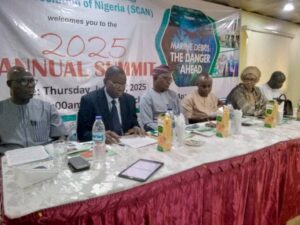
This appeal was made during the 2025 annual summit of the Shipping Correspondents Association of Nigeria (SCAN) held in Lagos.
Participants highlighted that marine debris not only impairs navigational safety and affects port operations but also leads to pollution along coastlines. This pollution poses a significant threat to tourism, undermines the livelihoods of coastal communities, and jeopardizes public health.
He noted that these threats often result in entanglement and ingestion, putting various species at risk.
Dantsoho was represented by Capt. Femi Oyewole, Principal Manager of Marine at the NPA.
He stated, “The dangers are no longer distant possibilities; they are present and growing,” underscoring the necessity to confront the issue directly. Dantsoho emphasized that the NPA has implemented several proactive measures to tackle marine debris, operating and regulating port reception facilities at all major ports in Nigeria. These efforts ensure compliance with the International Convention for the Prevention of Pollution from Ships (MARPOL 73/78), particularly Annex V, which addresses garbage disposal from visiting vessels.
The facilities, located across the NPA’s four Pilotage Districts—Lagos, Delta, Bonny/Port Harcourt, and Calabar—provide secure, environmentally sound reception and handling of waste from ships. They are equipped to receive a wide range of ship-generated waste, including plastics, food waste, domestic garbage, oily rags, and hazardous residues, as well as daily sludges and bilges. By offering these services, the NPA aims to eliminate the incentive for illegal disposal of waste into the ocean.
.
“By doing so, we eliminate the incentive for illegal disposal into the marine environment and ensure that all wastes are treated, recycled, or disposed of in accordance with national and international environmental standards,” Dantsoho stated. He highlighted the ongoing initiatives undertaken by the NPA, including regular dedicated marine litter and seaweed cleanup exercises within and around port channels, berths, and quay aprons.
These cleanup efforts target the removal of plastics, packaging materials, vegetation waste, and other solid litter. “By removing these materials, we are able to protect marine life, reduce blockages in port drainage systems, and ensure the smooth operation of vessels in port environments and navigational channels,” he added.
Pius Akutah, Executive Secretary and Chief Executive Officer of the Nigerian Shippers Council (NSC), praised the Shipping Correspondents Association of Nigeria (SCAN) for addressing such a crucial topic. He underscored the need to prioritize the clearance of water channels, ensuring free navigation for vessels in inland waterways.
Pius Akutah, represented by Deputy Director of Monitoring and Enforcement, Adeshina Sarumi, pointed out that having water channels filled with waste or shipwrecks poses significant challenges to the country’s water transportation network. He emphasized the necessity for media professionals to verify and accurately report facts and figures, which can help facilitate the operations of relevant agencies.
Bolaji Oyebamiji, Managing Director of the National Inland Waterways Authority (NIWA), reiterated the urgency of addressing marine litter. He urged all stakeholders to engage actively in tackling this critical issue. Recognizing the global nature of the marine waste problem, Oyebamiji, represented by Assistant General Manager, Mrs. Aisha Eri, stressed the importance of raising awareness within coastal communities about the effects of marine debris.
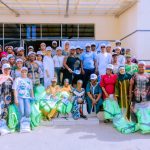
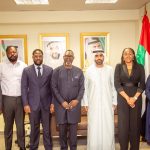
Stakeholders in Nigeria’s maritime sector at SCAN 2025 ANNUAL SUMMIT in Lagos.
To combat this growing concern, Oyebamiji highlighted that there is an existing marine litter action plan designed to involve all stakeholders in shared responsibilities. These collaborative initiatives aim to effectively manage and reduce marine debris, ensuring cleaner and safer waterways for all.
NIWA and other agencies are committed to implementing measures that will not only protect the maritime environment but also facilitate efficient navigation and transportation. The collective responsibility of various sectors is seen as vital to achieving long-lasting solutions to marine waste problems, fostering a safer and more sustainable waterway system in Nigeria.
With continuous engagement, education, and cooperation among all interested parties, there is hope for a more effective approach to reducing marine debris and improving the overall health of the country’s aquatic ecosystems.
Captain Tajudeen Alao, the Guest Speaker and President of the Nigerian Association of Master Mariners, raised alarm over the impact of marine debris on tourism and the nation’s maritime competitiveness. He noted that several key areas that could serve as tourist attractions have been compromised due to accumulating waste. His concerns were echoed by Captain Olugunwa Jide, the Second Vice-President of the association, who emphasized the need for a robust legislative framework. Jide proposed a fine of N5 million for violators of waste disposal regulations, seeking accountability in efforts to combat marine pollution.
President, SCAN, said the theme of the summit, “Marine Debris: The Danger Ahead,” highlights the urgent need to address the crisis of marine debris and its threat to the maritime industry, marine ecosystems, and coastal communities.
He said the summit is designed to encourage national dialogue and foster collaboration among various stakeholders in order to develop effective strategies for addressing marine debris and other types of marine pollution.
Ebosele emphasized that the increasing presence of marine debris poses significant threats beyond environmental degradation; it also represents a socioeconomic challenge that could jeopardize the foundations of Nigeria’s maritime industry and coastal communities.
Newspoint247 reports that the summit brought together industry leaders, environmental advocates, and policymakers to discuss strategies for mitigating the impacts of marine debris and safeguarding the future of Nigeria’s maritime environment.