





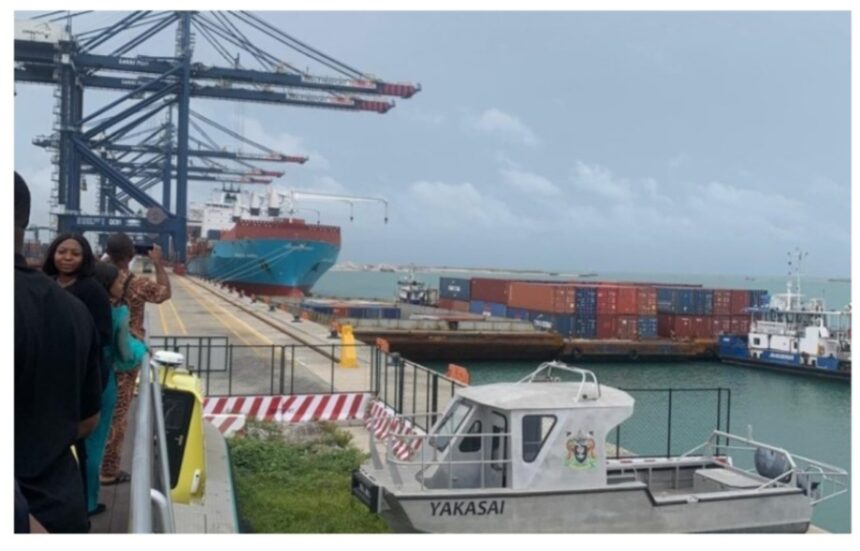
In a remarkable turn of events, Lekki Deep Sea Port has achieved a significant milestone, reaching nearly half of its designed operational capacity, with consistent month-on-month growth in container throughput since September.
This development is a testament to the increasing confidence of shipping lines and cargo owners in Nigeria’s first deep seaport.
- Advertisement -
The Managing Director/Chief Executive Officer of Lekki Port LFTZ Enterprise Limited, Mr. Wang Qiang, made this disclosure during an end-of-year media parley with journalists on Tuesday,December 16th in Lagos.
He highlighted that the port’s growth is a reflection of its potential to become a major player in the region.
Wang emphasized that efficient multimodal connectivity is crucial to sustaining and accelerating growth at the port. He noted that barge operations have become an essential evacuation channel, accounting for about 10% of cargo movement from the port. This development has improved the port’s efficiency and reduced congestion.
“The ongoing Lagos-Calabar Coastal Road project is expected to ease congestion and improve access to the port”.
However, he stressed that rail connectivity remains essential, particularly given the scale of industrial activities emerging within the Lekki corridor. Wang expressed optimism that the government will provide the necessary rail infrastructure.
As a fully automated terminal, Lekki Port is poised for further growth, but Wang cautioned that delays may persist until all stakeholders, including government agencies, fully align with end-to-end digital processes. He emphasized that Customs procedures and other port services must be fully digitalized to significantly reduce cargo dwell time.
Capt. Jedrzej Mierzewski, Chief Executive Officer of Lekki Freeport Terminal (LFT), highlighted the terminal’s rapid growth, having become the number two terminal in the Nigerian market within just two years of operations. He attributed this success to the terminal’s modern infrastructure, operational excellence, and ambition to become a leading transshipment hub for West Africa.
Mierzewski stressed that improved connectivity would enable the port to effectively double its capacity through performance optimization without expanding its physical footprint. He also urged the government to adopt a simplified tax framework that supports ease of doing business, citing Germany and other countries as examples.
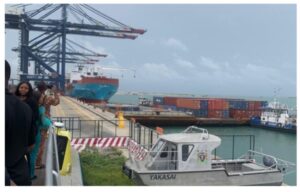
Newspoints247 reports that Lekki Port has handled an estimated N13.46 trillion in total trade value between Q1 and Q3 2025, making it Nigeria’s second-largest port by trade value. This figure surpasses Tin Can Island Port’s N9.31 trillion and is almost double the N6.76 trillion recorded at Port Harcourt (Onne).