





By Sandra Chukwunyere
The Federal Government of Nigeria has approved the digitisation of Nigeria’s fish import licensing process, aiming to enhance transparency, efficiency, and regulatory oversight in the fisheries sector.
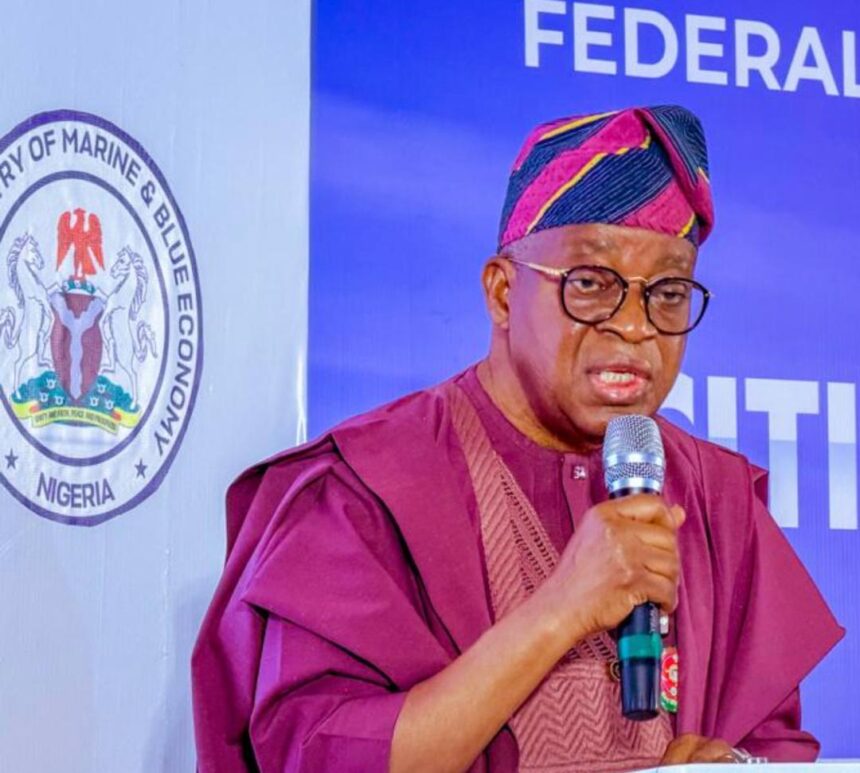
This was contained in a statement by Dr Bolaji Akinola, Special Adviser to the Honourable Minister of Marine and Blue Economy, Dr Adegboyega Oyetola.
- Advertisement -

The move is part of the government’s efforts to modernise marine administration and strengthen domestic fish production capacity, aligning with President Bola Ahmed Tinubu’s Renewed Hope Agenda.
Oyetola has directed the Department of Fisheries and Aquaculture to expedite action towards the swift implementation of the digital platform, signalling the Federal Government’s renewed commitment to modernising marine administration.
“This initiative is expected to simplify procedures for genuine operators, strengthen government oversight, promote accountability, and support the broader objective of boosting local fish production.”
“The approval represents a significant step in the ongoing reform agenda of the Federal Ministry of Marine and Blue Economy, which seeks to deploy technology-driven solutions to improve governance, reduce bureaucratic bottlenecks, and promote accountability across the fisheries value chain.”
“The transition from manual licensing procedures to a digital system is expected to streamline application processes, minimise delays, eliminate duplications, and drastically reduce opportunities for human interference and administrative inefficiencies.”
By introducing an automated licensing framework, the Ministry is positioning Nigeria’s fisheries management system to align with global best practices in maritime and aquatic resource administration.
This move is expected to provide real-time data monitoring capabilities, enabling the Ministry to accurately track import volumes, evaluate supply gaps, and implement evidence-based policy decisions.
Improved data analytics will support more strategic planning for Nigeria’s fisheries sector, ensuring that import licences are granted in a manner that reflects national food security priorities while protecting local producers from unfair competition. The digital system is also expected to strengthen regulatory compliance by ensuring that only qualified and duly registered importers receive licences, thereby curbing illegal and unregulated importation activities that have historically undermined local aquaculture investments.
Dr Oyetola stressed that the reform is fundamentally linked to the Ministry’s commitment to revitalising domestic production. According to him, “Nigeria has enormous potential to achieve self-sufficiency in fish production, and we must create policies that encourage investment in local aquaculture while responsibly managing importation.”
The Minister’s directive is closely aligned with his broader vision to boost indigenous fish production and reduce Nigeria’s heavy reliance on imported fish products. Nigeria remains one of Africa’s largest consumers of fish, with demand consistently outpacing local supply. The digitisation of fish import licensing is expected to serve as a critical regulatory tool that supports this objective by ensuring that importation does not stifle the growth of domestic producers.

The Honourable Minister has repeatedly emphasised the urgent need to bridge this production gap through strategic investment in aquaculture, enhanced fisheries management, and the creation of enabling policies that encourage private sector participation.