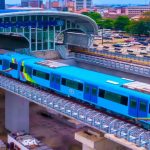






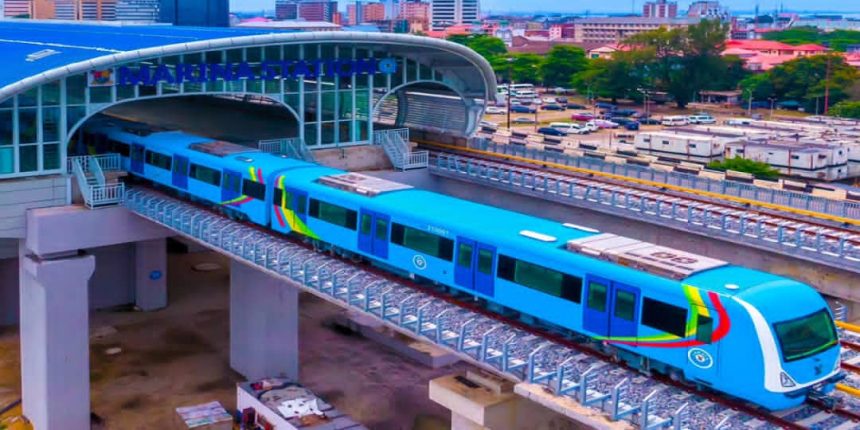
The Lagos Metropolitan Area Transport Authority (LAMATA) says it will add three stations to the Lagos Blue Line Rail by the end of February 2027.
The Managing Director of LAMATA, Mrs Abimbola Akinajo, disclosed this at a media conference on Thursday in Lagos.
The News Agency of Nigeria (NAN) reports that the conference was organised by the Ministry of Transportation.
Akinajo said the new stations would be located at Alakija, FESTAC and Trade Fair.
“The expansion is part of the authority’s phased plan to extend the Blue Line to Okokomaiko.
“There are also plans to introduce three new eight-car train sets on the Lagos Red Line Rail in November 2026,” she said.
Akinajo said the additional trains would increase the Red Line’s daily services from nine to 20 initially, with plans to raise the number to 28 before the end of 2027.
She said LAMATA would continue to expand train services, noting that the Blue Line’s daily services had increased from 12 to 92.
Akinajo added that four major Quality Bus Corridor projects, including their terminals and depots, were expected to be completed by February 2027.
“The authority is also shifting towards cleaner transportation and will no longer procure diesel-powered buses.
“Future bus acquisitions will focus on Compressed Natural Gas (CNG) and electric-powered vehicles, in line with the Federal Government’s net-zero emissions target for 2050.
“Additional CNG buses are expected within the next five to six months,” she said.
Akinajo said LAMATA was strengthening collaboration with transport unions to establish a coordinated and regulated public transportation system across Lagos State.
She said the partnership between the government and transport unions would improve public transport services and support a more integrated and environmentally sustainable transport system.
On fares, Akinajo said the authority had maintained public transportation fares since January, in spite of significant increases in diesel and gas prices.
She said the decision had helped passengers avoid additional transport costs amid rising operational expenses.
“The authority attributes this stability to a balanced mix of diesel-powered, gas-powered and electric buses, noting that savings from electric buses have helped offset rising costs.
“Passengers have benefited from unchanged fares, even without an actual reduction in ticket prices,” she said