







By Sandra Chukwunyere
BUA Group has announced plans to invest about $85 million in the expansion of its port and terminal facilities in Port Harcourt, Rivers State, in a move aimed at boosting cargo handling capacity and supporting the company’s growing industrial operations.
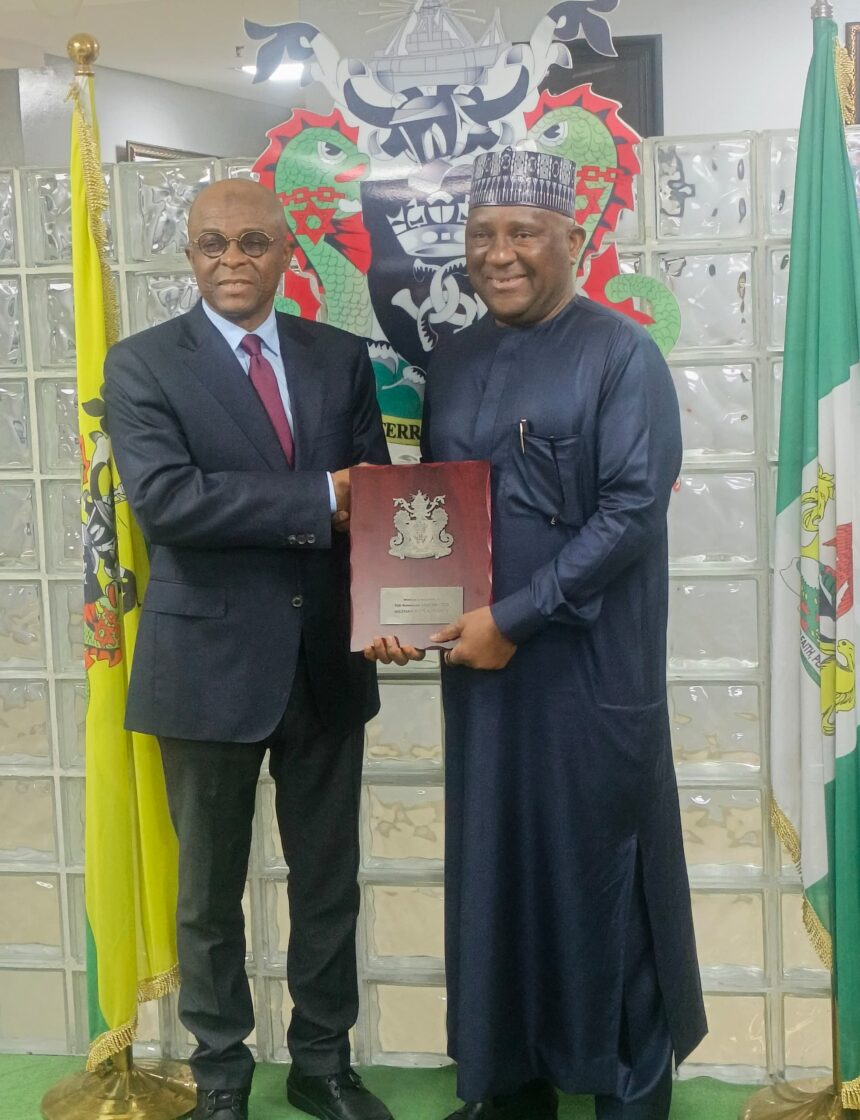
Chairman of BUA Group, Abdul Samad Rabiu, disclosed this during a visit to the Managing Director of the Nigerian Ports Authority (NPA), Abubakar Dantsoho, where he briefed the agency on the progress of the ongoing project and expressed appreciation for its support.
According to Rabiu, the expansion will provide about 600 metres of additional quay frontage, significantly increasing the terminal’s ability to receive vessels carrying raw materials and other cargoes needed for the group’s expanding businesses.
He explained that the project is being driven by the anticipated growth in imports required to sustain BUA’s operations in food processing, manufacturing, mining and other sectors.
Rabiu revealed that once completed next year, the facility is expected to handle more than two million tonnes of raw materials and products annually through Port Harcourt.
He noted that the projected cargo volume would require a modern and efficient terminal capable of accommodating regular vessel traffic and ensuring seamless cargo operations.
The BUA chairman said the company expects between six and seven vessels to call at the facility every month when the expansion becomes fully operational.
He stressed that efficient maritime infrastructure remains a critical factor in supporting the growth of industries such as sugar refining, flour milling, pasta and noodles production, edible oil processing and cement manufacturing.
Rabiu also underscored the need for greater investment in port infrastructure across the country, particularly outside Lagos, arguing that Nigeria’s economic potential can only be fully realised through a well-developed and geographically balanced port system.
He commended the NPA management for creating an enabling environment for private sector participation in port development and acknowledged the Federal Government’s efforts in supporting investments that strengthen the nation’s maritime sector.
Reflecting on the history of the Port Harcourt terminal, Rabiu recalled that the facility’s concession was at one point withdrawn but expressed satisfaction that the project is now progressing with the cooperation and support of the NPA.
According to him, the development demonstrates the value of collaboration between government institutions and private investors in delivering infrastructure capable of driving industrial and economic growth.
In his response, NPA Managing Director Abubakar Dantsoho described BUA as one of the authority’s key stakeholders and assured the company of continued support for the project.
Dantsoho said the NPA remains committed to encouraging investments that increase cargo throughput, improve the utilisation of eastern ports and enhance Nigeria’s competitiveness within the West and Central African maritime region.
He noted that BUA’s decision to expand its investments beyond Lagos into Port Harcourt aligns with the authority’s objective of promoting balanced port development across the country.
According to him, increased cargo movement through Port Harcourt will not only strengthen trade activities but also create additional economic opportunities, generate revenue and support foreign exchange earnings.
The NPA boss said the authority’s strategy is anchored on close collaboration with investors, terminal operators and other stakeholders across the maritime value chain to improve operational efficiency and service delivery at Nigerian ports.
He added that the Port Harcourt expansion is expected to contribute significantly to cargo traffic growth within the eastern corridor while reinforcing efforts to reduce pressure on the Lagos port axis.
Dantsoho also pointed to recent international assessments by global institutions, including S&P Global and the World Bank, which ranked Nigerian ports among the world’s most improved, noting that ongoing reforms and investments are yielding positive results.
He maintained that sustained engagement between the NPA and port users remains essential to achieving the goal of building smart, efficient and globally competitive ports.
Industry observers believe the project could play a significant role in repositioning Port Harcourt as a major cargo gateway, while supporting the Federal Government’s drive to promote greater utilisation of eastern ports.
With the additional berth space and projected cargo volumes, the investment is expected to strengthen the logistics backbone of BUA’s industrial operations and further stimulate economic activities within the eastern maritime corridor.
When comple

ted, the expanded facility will rank among the most significant private-sector investments in Nigeria’s port infrastructure, reinforcing the growing role of the private sector in the development of the nation’s maritime industry.